
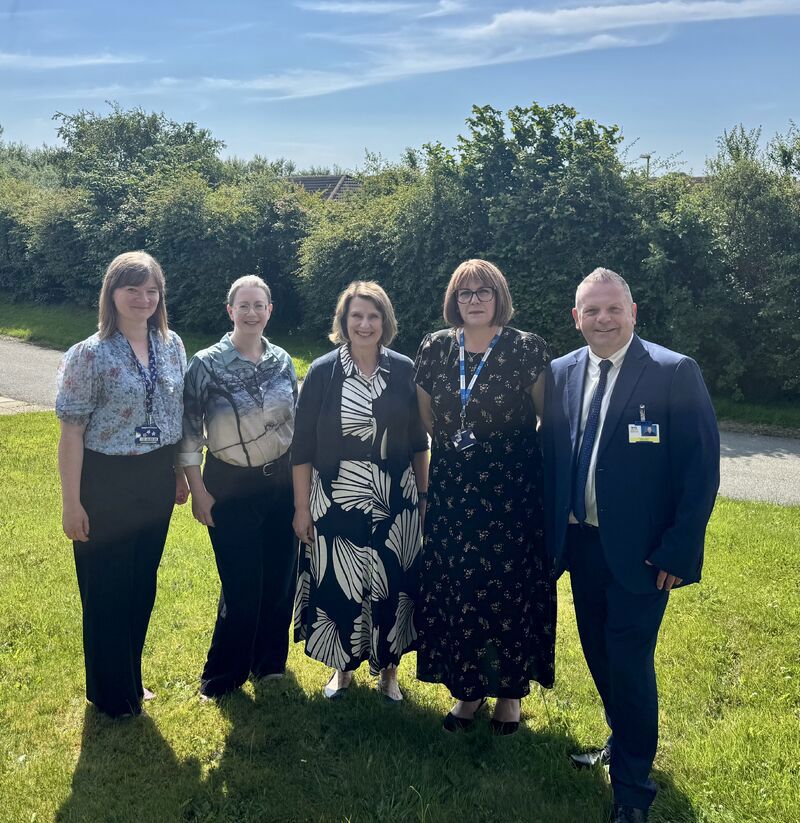
I recently had the privilege of spending a genuinely valuable day with colleagues from NHS Western Isles, hosted by Gordon Jamieson, Chief Executive; Dr Sarah Else, Medical Director; Frances Robertson, Nurse and AHP Director and Chief Operating Officer; and Janette Murray, Clinical Lead for Urgent and Unscheduled Care.
The visit offered a powerful insight into both the challenges and innovations involved in delivering health and care services across one of Scotland's most geographically dispersed communities. As is the case across NHS Scotland, the most significant cause of delayed discharge remains a lack of available social care capacity. Yet despite these pressures, teams across the Western Isles continue to deliver high-quality, person-centred care in often challenging circumstances.
What became immediately clear is that community-based services are the backbone of safe and effective care across the islands. Community nursing teams, Hospital at Home services and unscheduled care teams provide vital support to people in their own homes across an island chain stretching more than 180 miles. Their work helps prevent unnecessary hospital admissions and ensures people can receive care closer to home whenever possible.
One of the most impressive examples of innovation was the combined Acute Assessment Unit (AAU) and Hospital at Home (H@H) model. Specialist practitioners work across both services, creating a seamless approach to urgent care. This integrated model has contributed to a 40% reduction in A&E waiting times while enabling Hospital at Home teams to care for patients of all ages in their own communities. It is an excellent example of how services can be redesigned to meet the needs of dispersed populations and offers valuable lessons for the development of a nationally mandated Hospital at Home framework.
I was equally impressed by the work of the Stornoway Hospital Day Care Unit. Despite the logistical challenges associated with island geography, including dependence on mainland supply chains and patients often relying on ferries and flights to access treatment, the team continues to deliver chemotherapy and other specialist services close to home. Their commitment and resilience deserve real recognition.
I would also like to acknowledge the crucial role played by HM Coastguard. Often operating behind the scenes, coastguard teams stand ready to support patient transportation when other options are unavailable. In remote and island communities, where geography and weather can create significant barriers to accessing care, their ability to assist with urgent patient transfers is an essential part of the infrastructure that underpins patient safety. Their contribution deserves greater recognition.
One moment that particularly stayed with me was meeting Marie at the airport. Having been airlifted from South Uist to Stornoway, Marie was keen to tell a complete stranger how well she had been cared for throughout her journey. Her story was a powerful reminder that behind every service model and workforce challenge are people whose lives are improved by the dedication and compassion of NHS and care staff.
However, NHS Western Isles faces many of the same challenges seen elsewhere in Scotland. More than 20 full-time equivalent social care vacancies are contributing to delayed discharge and placing additional strain on services. These workforce shortages undermine a system designed to keep people well, independent and out of hospital whenever possible.
The experience reinforced an important message: rural and island health boards need assurance and performance frameworks that reflect their geography, populations and operating realities, rather than models designed primarily for urban settings.
My thanks go to everyone across NHS Western Isles, partner organisations and emergency service partners who work tirelessly to keep their communities safe. Their innovation, commitment and resilience provide valuable lessons for Scotland's wider health and care system.
Original post available on LinkedIn
[Image description: A group of five people stand side by side on a grassy lawn during a visit to NHS Western Isles including Karen Titchener Patient Safety Commissioner, Gordon Jamieson (Chief Executive), Dr Sarah Else (Medical Director), Frances Robertson (Nurse and AHP Director/COO), and Janette Murray (Clinical Lead, Urgent and Unscheduled Care). The photograph is taken outdoors on a sunny day, with a road, hedges and trees visible behind the group. All five individuals are facing the camera and wearing business or smart-casual clothing, with some displaying NHS identification badges. The image illustrates collaboration and engagement between healthcare leaders and staff in a rural healthcare setting.]
